Malaysia joins Thailand, Vietnam and the Philippines in an unstoppable 2026 medical tourism blitz to lure patients away from the West, and the stakes are high. In this 2026 campaign, Malaysia joins its ASEAN neighbours to showcase world class hospitals, wellness retreats and affordable care. At the same time, Thailand sharpens its wellness brand, Vietnam expands its medical tourism infrastructure, and the Philippines upgrades its patient focused services. Together, this united front aims to lure patients away from the West with lower costs, shorter waiting times and warmer hospitality. As Malaysia joins this regional wave, each country amplifies the others, and the 2026 medical tourism blitz gains momentum. In effect, Thailand, Vietnam, the Philippines and Malaysia join forces in a strategic move to challenge traditional Western healthcare destinations and to position Asia as the new centre of gravity for global medical tourism
Malaysia: Healing Meets Hospitality on a National Stage
In Malaysia, 2026 has been officially declared the Malaysia Year of Medical Tourism, marking the first time the country has dedicated an entire tourism year to healthcare travel. Through the Malaysia Healthcare Travel Council’s campaign Healing Meets Hospitality, the initiative is being closely aligned with the nationwide Visit Malaysia 2026 drive, creating a unified message that health, culture and hospitality are meant to be experienced together. Official programme documents reveal that the goals include attracting more international health travellers, upgrading hospital infrastructure, improving service standards and elevating Malaysia’s visibility in the global medical tourism market.
The emphasis is being placed on delivering seamless care journeys, where patients receive personalised, end to end support from arrival to recovery. Warmth, multicultural hospitality and a sense of cultural richness are being highlighted as defining elements of the Malaysian experience, alongside the clinical strength of its hospitals. Through this alignment of healthcare and tourism branding, the government is positioning Malaysia as a compassionate healthcare hub that offers world class treatment embedded within memorable travel experiences, rather than as a purely clinical destination.
This national positioning represents a bold statement of intent. By branding 2026 as the Malaysia Year of Medical Tourism, Malaysia is signalling not just a sectoral campaign but a strategic bid to consolidate and expand its leadership in the regional medical tourism market.
Partnerships powering Malaysia’s healthcare tourism push
Behind the campaign’s public tagline lies a structured partnership between tourism and health authorities. Tourism Malaysia and the Malaysia Healthcare Travel Council have formalised their collaboration through a Memorandum of Cooperation signed in December 2025. The agreement commits both sides to joint promotion of medical tourism during Visit Malaysia 2026 and the Malaysia Year of Medical Tourism, including coordinated advertising campaigns, targeted roadshows, and familiarisation trips for foreign media, tour operators and medical buyers.
Key target markets have been identified as Indonesia, the Gulf states, China and India, reflecting Malaysia’s focus on attracting high value patients who may also travel with companions, extend their stays or combine treatment with leisure holidays. Through these partnerships, medical tourism is being treated not as an isolated niche but as an integrated national priority, fully woven into Malaysia’s overall strategy for tourism growth, investment and soft power.
Malaysia has also been showcasing its healthcare brand overseas ahead of 2026. In 2025, the Malaysia Healthcare Travel Council organised Malaysia Healthcare Week in Kuwait, which combined a Yes2Malaysia health expo with cultural performances and tourism promotion. The multi day programme brought together hospitals, universities and tourism operators and was explicitly promoted as a stepping stone towards the Malaysia Year of Medical Tourism. By presenting both medical capabilities and cultural attractions in the same platform, Malaysia has been using medical tourism as a form of soft diplomacy, strengthening ties with foreign markets and giving prospective patients a preview of Malaysian hospitality and lifestyle before they travel.
Flagship medical tourism hospitals: Malaysia’s super hubs of care
Central to Malaysia’s strategy is the creation of Flagship Medical Tourism Hospitals, conceived as high performing anchor institutions that can represent the country’s best practice in international healthcare. Official reports indicate that four hospitals have reached the final assessment stage of this flagship programme: Institut Jantung Negara, Island Hospital Penang, Mahkota Medical Centre and Subang Jaya Medical Centre.
These hospitals are being assessed against stringent criteria covering cutting edge clinical capabilities, seamless patient experience, international accreditation and hospitality standards. By designating a small, elite group of super hospitals, Malaysia aims to present its medical facilities as destinations in their own right, comparable to leading international centres. This model is expected to raise standards across the entire system and give medical travellers confidence that they can access world class care while enjoying the cultural and leisure offerings associated with a tourism trip.
Thailand: Orchestrating a global symphony of wellness
Thailand is approaching the health tourism race from the vantage point of an established wellness leader. A major milestone has been secured with the decision to host the Global Wellness Summit 2026 in Phuket. Government and summit announcements confirm that the event will take place from 10 to 13 November 2026 under the theme The Symphony of Wellness and is expected to welcome more than 600 delegates from over 30 countries.
Thai authorities are framing the summit as both honour and opportunity. It will be used to showcase the country’s strengths in holistic well being, including modern medical services, traditional Thai medicine, spa culture and cutting edge wellness innovation. Hosting the summit is projected to spur investment in wellness businesses, strengthen global confidence in Thai healthcare and elevate Phuket’s status as a premier wellness destination within Asia.
Officials describe the summit as more than a conference. It is being presented as a platform to accelerate a wellness economy that prioritises partnerships, knowledge exchange and innovation. By bringing together executives, spa operators, healthcare providers, policymakers and investors, Thailand intends to position itself both as a thought leader and as a practical hub where wellness concepts are transformed into market ready products and services.
Local authorities in Phuket are planning to weave wellness experiences directly into the summit programme, including yoga retreats, herbal saunas, nature based escapes and cultural immersion activities. These curated itineraries aim to immerse delegates in Thai hospitality and environment, turning the summit itself into a live demonstration of the country’s health tourism assets.

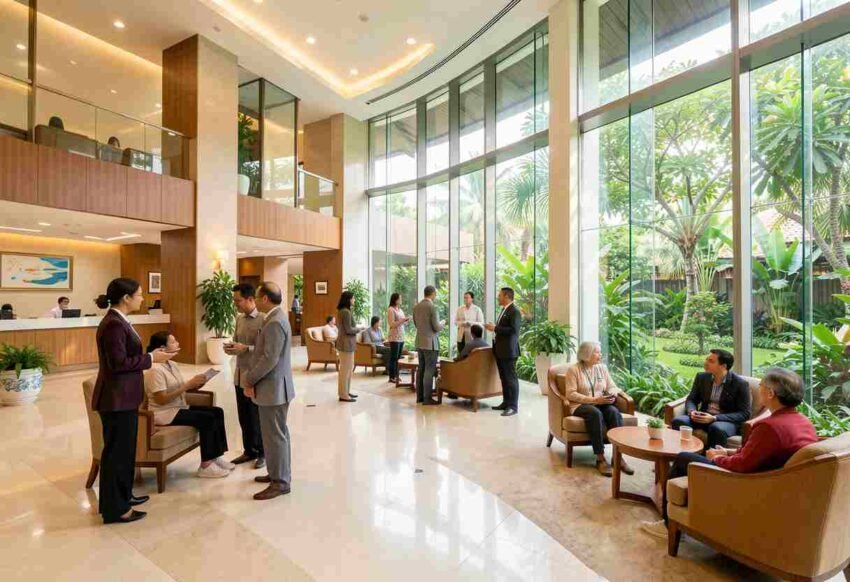
Image generated with Ai
Healing Journey Thailand: wellness as the new luxury
Thailand’s ambitions extend beyond hosting a single global event. In January 2026, the Tourism Authority of Thailand launched the Healing Journey Thailand campaign to position the country as a wellness led luxury destination. The campaign is built around a 5R framework: Retreats, Rituals, Reels, Rhythms and Relations. Each R is used to frame specific kinds of experiences, from detox and spa retreats to cultural rituals, social media friendly journeys and community connections that promote mental and emotional well being.
Thai officials have characterised healing as the new luxury, emphasising that more travellers are seeking rest, renewal and emotional balance rather than only shopping or sightseeing. The campaign uses storytelling, digital platforms and collaborations with influencers, including artists such as singer Henry Moodie, to appeal especially to younger travellers who discover destinations through social media and shared visual narratives.
Thailand is also investing in the intellectual and scientific foundations of its wellness brand. In April 2026, Khon Kaen University’s Faculty of Pharmaceutical Sciences will host the 5th International Conference on Herbal and Traditional Medicine in Bangkok under the theme Integrating Traditional Wisdom and Modern Innovation for Global Health. The conference is set to bring together scientists, doctors, policymakers and practitioners to explore herbal therapeutics, regulatory frameworks and evidence based uses of traditional medicine.
By placing herbal and traditional medicine in dialogue with modern research and global regulatory standards, Thailand is reinforcing its identity as a cradle of holistic healing where ancient practices are continuously updated and validated. This positioning supports its wellness tourism narrative, as visitors increasingly look for destinations where tradition and innovation cooperate rather than compete.
National tourism plans further underscore the experiential and wellness focus. The Ministry of Tourism and Sports is prioritising high value visitors by improving infrastructure, safety and accessibility, and by promoting immersive cultural experiences that integrate health, relaxation and community connections. Investments in signage, restrooms, access facilities and cross sector cooperation are being used to ensure that wellness tourists can navigate destinations comfortably and confidently, bolstering Thailand’s bid to remain Asia’s wellness powerhouse.
Vietnam: trade fairs and policy platforms for medical tourism
Vietnam is advancing its own medical tourism ambitions through a blend of large scale trade exhibitions, policy messaging and product development. The 34th Vietnam International Medical and Pharmaceutical Exhibition, known as Vietnam Medi Pharm 2026, is scheduled to take place from 6 to 9 May 2026 at the Vietnam Soviet Friendship Cultural Palace in Hanoi. Official trade fair listings and event brochures describe the exhibition as a showcase for pharmaceuticals, functional foods, medical equipment, dental technology, beauty products, laboratory instruments and services related to medical tourism.
The exhibition is open to trade visitors and features conferences, seminars and business matchmaking activities. The explicit inclusion of medical tourism in the list of categories positions Vietnam not only as a buyer and seller of healthcare technologies but also as a potential destination for patients and wellness travellers.
Government backing for the event is clearly stated. In a welcome message, the Ministry of Health, through Deputy Minister Nguyen Thi Lien Huong, emphasises that the fair helps disseminate Party and State policies on health, highlights scientific and technological advances, and connects domestic and international businesses. The exhibition is described as a platform for exchanging experiences in medical and pharmaceutical development, suggesting that it plays a role in Vietnam’s wider strategy to modernise healthcare and encourage innovation in partnership with the private sector.
Vietnamese officials have publicly stated that medical tourism is emerging as a promising sector. Ha Anh Duc, director of the Department of Medical Service Administration, has pointed to the country’s competitive advantages, which include affordable but quality healthcare, skilled doctors, appealing landscapes and rich cultural heritage. He has also highlighted the need for closer collaboration between the health and tourism industries to develop integrated packages that combine treatment with travel.
Policy work is under way to standardise services, strengthen patient safety frameworks and ensure consistent quality for international visitors. This suggests that Vietnam is focused not only on attracting medical tourists in the short term but on building a sustainable, trustworthy sector that can scale over time.
Vietnam’s premium health tourism packages
In Ho Chi Minh City, authorities are moving from vision to product design. The city’s Department of Tourism is developing premium health tourism products linked to neighbouring southeastern regions. Late 2025 field surveys examined hospitals, wellness centres, spas and resorts with the goal of designing high value packages that combine medical check ups, detox programmes and cultural tours.
These packages are being aimed at long stay visitors who wish to recover energy, manage chronic conditions or simply reset their lifestyles in a supportive environment. Planned offerings are expected to combine medical care with visits to coastal resorts, heritage sites and culinary experiences, creating itineraries where health, culture and leisure are deliberately interwoven.
By launching such products in 2026, Vietnam is positioning itself to capture a share of the growing market for integrated wellness and medical travel, while also spreading benefits to multiple regions and sectors.

Image generated with Ai
The Philippines: caring gateways and island wellness
The Philippines is likewise making calculated moves to support a future boom in medical and wellness tourism. Infrastructure at the point of entry is being adapted with this in mind. In December 2025, President Ferdinand R. Marcos Jr. led the inauguration of new amenities at Ninoy Aquino International Airport Terminal 3, including a dedicated Medical Tourism Concierge Area. This area is staffed by personnel trained to assist medical travellers with airport procedures, transfers and information, with an emphasis on quick, compassionate service.
The concierge concept is meant to ensure that health travellers experience comfort and dignity from the moment they land, and that they are smoothly connected with hospitals, clinics and wellness facilities across the country. This gateway initiative indicates that the Philippines intends to compete not only on treatment quality but also on the softness and humanity of the overall journey.
The Department of Tourism’s 2025 year end report highlights two complementary innovations: the Transit Tour Program and Medical Concierge Services. The Transit Tour Program is designed for travellers with long layovers, offering curated short tours of Manila’s key attractions, while Medical Concierge Services connect patients to Department of Tourism accredited hospitals and wellness centres nationwide. Tourism Secretary Christina Garcia Frasco has described these services as tools to support the growing medical and wellness tourism sector while enhancing the general visitor experience.
Health security and wellness destinations in the Philippines
Beyond airports and concierge desks, the Philippines has been working to demonstrate its capacity to host large tourism and health related events safely. In preparation for the ASEAN Tourism Forum 2026 in Cebu, the Department of Health placed the local health system on Code White, a heightened state of readiness. Between four and eight medical teams were deployed at each venue, comprising doctors, nurses and emergency medical technicians, with a 24 hour command centre overseeing response and referral systems. Sanitation inspectors from local government units monitored water and food safety for delegates and participants.
This mobilisation sends a message that the country is able to protect the health of visitors during major events, an important reassurance for partners and prospective medical and wellness travellers.
At the destination level, the Provincial Government of Bohol has been pursuing a distinctive wellness identity. On 6 January 2026, Bohol joined the Health and Wellness Tourism Association to launch Nurturing Bohol: A Hub for Global Wellness and Sustainable Tourism at The Bellevue Resort. The initiative seeks to transform Bohol into a healing destination by weaving together health services, nature based experiences, cultural practices and community based tourism. Programmes include mindfulness retreats, nature immersion and preventive health services, with a strong emphasis on sustainable hospitality and local stewardship.
The effort aligns with Bohol’s status as a UNESCO Global Geopark and relies on partnerships between government, private stakeholders and communities. It positions the island as a future leader in wellness tourism, offering an experience where ecological protection, community benefits and visitor well being are treated as mutually reinforcing.
The Philippines first made its wellness ambitions highly visible during the International Health and Wellness Tourism Congress in October 2024 at the Grand Hyatt Manila. Opened by First Lady Louise Araneta Marcos and Tourism Secretary Frasco, the congress introduced international delegates to the Filipino concept of Aruga, or tender care, as a cornerstone of the country’s wellness identity. The event brought together participants from dozens of countries to explore how Filipino hospitality and holistic traditions could attract wellness travellers seeking emotional warmth alongside physical care.
ASEAN’s shared horizon: health, hospitality and competition
Across Malaysia, Thailand, Vietnam and the Philippines, a common pattern is emerging. Medical and wellness tourism is no longer being treated as a side business; it is being integrated into national branding, infrastructure plans and diplomatic outreach. Malaysia is aligning its Year of Medical Tourism with Visit Malaysia 2026 and building a stable of flagship hospitals. Thailand is using global summits, campaigns and research conferences to project itself as a holistic wellness leader. Vietnam is leveraging trade fairs, policy statements and premium packages to grow both its health sector and tourism appeal. The Philippines is reshaping airports, islands and national narratives around care, Aruga and wellness.
Together, these efforts illustrate a regional race to win not just the wallets, but also the trust and well being of travellers. In this evolving landscape, the ASEAN region is being cast as a place where a hospital visit can be combined with a holiday, and where healing is offered not only through medicine, but also through culture, nature and human connection.